
Periods
Irregular Periods and PCOS: Why They Happen and When to Worry
Why PCOS makes periods late or stop, the exact cycle lengths that count as irregular, when a long gap becomes a risk, and what actually helps.
By Dr. Parikshit · 10 min read
Clear, evidence-based guides on PCOS, periods, skin, weight, mood and more. Written by our doctor, with every fact linked to its source.
Periods
Why PCOS makes periods late or stop, the exact cycle lengths that count as irregular, when a long gap becomes a risk, and what actually helps.
By Dr. Parikshit · 10 min read

Weight & metabolism
Why PCOS makes weight gather around the middle and resist dieting, what a 5-10% loss really does, the diabetes numbers, and a plan that fits Indian food.
By Dr. Parikshit · 10 min read

Mood, sleep & energy
Why anxiety, low mood and mood swings are so common in PCOS, the warning signs that need help today, and what actually helps.
By Dr. Parikshit · 9 min read

Weight & metabolism
Why PCOS disturbs sleep, how common sleep apnoea really is, the signs to watch for, and how better sleep helps insulin resistance.
By Dr. Parikshit · 8 min read
Periods
PCOS is linked to pain and bloating, but the cysts are rarely the cause - here is what to check, and when pain is an emergency.
By Dr. Parikshit · 9 min read
Skin & hair
That dark, velvety neck patch is a visible sign of high insulin - here is what it means, which tests to get, and how it fades.
By Dr. Parikshit · 9 min read
Weight & metabolism
Why PCOS leaves so many women exhausted, the five hidden causes worth testing for, and what actually brings your energy back.
By Dr. Parikshit · 9 min read

PCOS basics
An honest look at PCOS and brain fog: what studies show about memory and focus, what is still unknown, and the testable causes worth fixing first.
By Dr. Parikshit · 9 min read

Skin & hair
Why PCOS thins scalp hair, which other causes to rule out first, the tests to ask for, and which treatments actually regrow hair.
By Dr. Parikshit · 9 min read

Skin & hair
Why PCOS causes coarse facial and body hair, how it is scored for Indian women, which tests to get, and which treatments work over what timeline.
By Dr. Parikshit · 9 min read

Tests
Understand PCOS in Young Women: symptoms, teen diagnosis rules, key tests, and care options for 2026. Get clear steps to
By Dr. Parikshit · 17 min read

Periods
Polycystic ovaries pregnancy explained: fertility, risks, and treatments. Learn how to confirm ovulation, use letrozole,
By Dr. Parikshit · 16 min read

Periods
Androgen hormones support bone, muscle, and fertility; excess can cause hirsutism, acne, and irregular periods. Learn ke
By Dr. Parikshit · 16 min read
Skin & hair
PCOS face hair (hirsutism) explained: why it happens and what truly helps-medical care plus removal. See options, timeli
By Dr. Parikshit · 20 min read
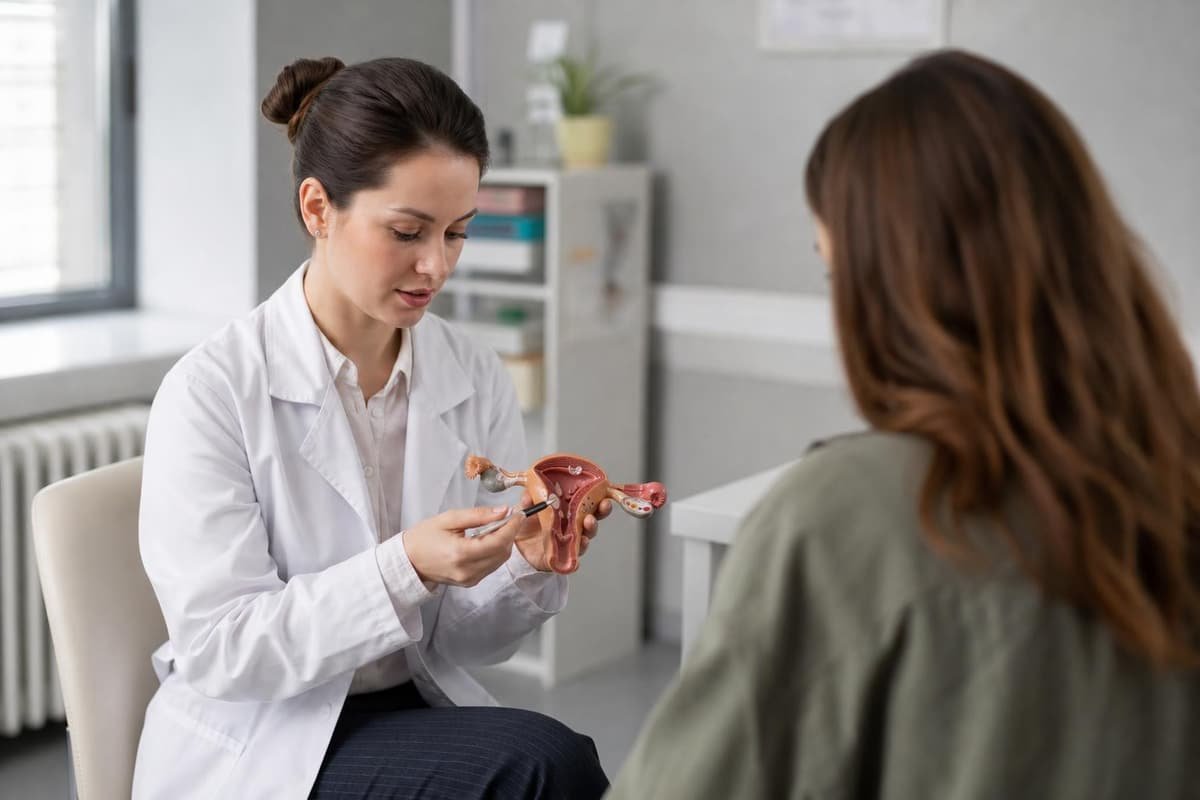
PCOS basics
Wondering what is a good AMH level to get pregnant? See the 1-4 ng/mL range, why age and ovulation matter most, and how
By Dr. Parikshit · 17 min read

Periods
Polycystic ovaries on a scan are not a diagnosis - and not a barrier to pregnancy.
By Dr. Parikshit · 10 min read

Periods
Adult hormonal acne settles on the lower face - and tracks your cycle.
By Dr. Riya · 6 min read
PCOS basics
Yes. And here is what that actually means for your body.
By Dr. Riya · 5 min read

PCOS basics
A normal weight is not a clearance. It is one of the most missed presentations.
By Dr. Parikshit · 6 min read
PCOS basics
PCOS is not one condition. It is at least four distinct presentations.
By Dr. Parikshit · 6 min read

Weight & metabolism
Your blood sugar can read normal for years while your insulin quietly climbs.
By Dr. Parikshit · 6 min read
PCOS basics
PCOS is rarely one loud symptom. It is usually several quiet ones.
By Dr. Parikshit · 5 min read
These articles are general health education, written by our doctor. They are not a diagnosis. For advice about your own body, book a PCOS Assessment.
PCOS hair loss is usually slow, patterned thinning at the top of your head, and it is treatable, but only once you know which of several possible causes is actually behind it.
This article covers:
You notice it in the mirror first. Your parting looks wider than it used to. The scalp shows through at the crown when you tie your hair back. Your ponytail feels thinner in your hand.
Then someone says, "It's just stress," or "Take biotin." Maybe you were told you have "PCOD" and nothing more.
Here is what is worth knowing. Hair thinning in PCOS/PMOS (polycystic ovary syndrome, recently proposed to be renamed polyendocrine metabolic ovarian syndrome) has a recognised pattern, a list of look-alike causes, and treatments that are tested in trials. The international PCOS guideline asks doctors to take your report of hair loss seriously, "regardless of apparent clinical severity" (2023 International PCOS Guideline). That includes the thinning only you can see yet.
It is common, though less common than many websites claim. A 2025 meta-analysis pooling 18 studies and 3,464 women with PCOS found female pattern hair loss in 22.7% of them (Rayner et al., 2025). In a study of women with PCOS in Assam, 28.3% had hair loss (Northeast India study, 2025).
PCOS itself is common in India. A meta-analysis of Indian studies put the pooled prevalence at 11.33% of women (Bharali et al., 2022).
Doctors call it female pattern hair loss (FPHL). The follicles (the tiny roots each hair grows from) slowly shrink. Each new hair grows back finer and shorter, until some follicles only make soft, barely visible hair (Cochrane review, 2016).
An expert panel of the Androgen Excess and PCOS Society describes two typical patterns (Carmina et al., 2019):
Thinning spreads outward from the centre of the scalp. Your middle parting gets broader year by year.
Thinning is heaviest towards the front of the parting, spreading out in a tree shape.
Your front hairline is generally kept, even while the top thins.
Changes build over months to years. Sudden handfuls of hair point to a different cause.
Why does the same hormone thin your scalp hair while darkening hair on your chin? Androgens (the "male-type" hormones such as testosterone, which every woman makes in small amounts) act differently on follicles in different places. On the face they make hair thicker. On the scalp, in women whose follicles are sensitive to them, they can shrink the follicle.
One important nuance. Thinning on its own is a weak signal of high androgens. The guideline says hair loss and acne "in isolation" are "relatively weak predictors" of raised androgen levels (2023 International PCOS Guideline). So hair loss alone does not diagnose PCOS. It is a reason to check properly. See Do I have PCOS? for the full criteria.
This is where many women lose years. PCOS hair loss often overlaps with other, fixable causes, and they can stack on top of each other.
Anaemia is extremely common in Indian women with PCOS. In one clinic study from Andhra Pradesh, 78.6% of women with PCOS were anaemic (Bhimavaram study, 2025). Iron deficiency can also exist without anaemia. One review notes this is seen in about 20% of cases of hair shedding, showing up only as a low ferritin (your body's iron store) below 20 (Malkud, 2015). A normal haemoglobin does not rule this out.
Both an underactive and an overactive thyroid can trigger hair shedding (Malkud, 2015). In the same Andhra Pradesh study, 20.82% of women with PCOS had hypothyroidism (Bhimavaram study, 2025).
This is called telogen effluvium: many hairs switch into their "resting and falling" phase at once after a shock to the body. Triggers include crash diets, starvation, major surgery, childbirth and thyroid disease. The shedding starts about 2 to 3 months after the trigger, is usually self-limiting, and lasts about 6 months (Malkud, 2015).
That delay matters. If you dieted hard in January, the hair fall may begin in April, and you may never connect the two. It also means an aggressive "lose weight fast for PCOS" plan can cause the very hair loss you were trying to fix.
A 2026 meta-analysis found significantly lower ferritin and vitamin D levels in women with telogen effluvium than in women without it (Skin Appendage Disorders meta-analysis, 2026).
The Androgen Excess and PCOS Society says every woman with pattern hair loss should be assessed for androgen excess, and that checking vitamin D, iron, zinc, thyroid hormones and prolactin is "optional but recommended" (Carmina et al., 2019). For PCOS itself, the guideline recommends total and free testosterone, and excluding other conditions with TSH, prolactin and 17-OH progesterone (2023 International PCOS Guideline).
| Test | What it tells you |
|---|---|
| Total testosterone + free androgen index (FAI) | Whether androgens are raised |
| DHEAS | An adrenal androgen, checked if testosterone is normal |
| TSH (± free T4) | Underactive or overactive thyroid |
| CBC + serum ferritin | Anaemia and low iron stores |
| Vitamin D (25-OH) | Deficiency linked to shedding |
| Prolactin | A hormone that can disturb cycles and hair |
| Fasting insulin, HbA1c | The metabolic side of PCOS (see insulin resistance) |
One practical tip: stop biotin supplements a few days before blood tests and tell your doctor you take them. High-dose biotin can distort thyroid results enough to mimic an overactive thyroid (case report and review, 2023).
Hair loss is the part you see. The same hormonal pattern is often doing things you cannot see.
So thinning hair is a good reason to get your whole PCOS picture checked, including sugar and insulin.
Minoxidil is the treatment with the strongest evidence. A Cochrane review found women using it were about twice as likely to report moderate-to-marked regrowth as those on placebo (risk ratio 1.93), with an average gain of about 13 hairs per square centimetre (Cochrane review, 2016). The AE-PCOS expert panel recommends treatment "should start with minoxidil (5%)" (Carmina et al., 2019); the Cochrane review found no clear difference between 2% and 5% in results.
What to expect:
Anti-androgens (medicines such as spironolactone that block androgen action) may help some women. For hair loss in PCOS, the guideline says they "could be trialled" together with the combined pill, while acknowledging the lack of evidence in PCOS specifically (2023 International PCOS Guideline).
The pregnancy warning is serious. Anti-androgens can cause incomplete development of the genitals of a male baby if you conceive while taking them (2023 International PCOS Guideline). The Endocrine Society recommends against using them alone unless you are on adequate contraception (Endocrine Society guideline, 2018). Never start these from a pharmacy counter or an online forum.
If ferritin, thyroid or vitamin D is low, correcting it is part of the treatment. With shedding after a trigger, hair loss takes 3 to 6 months to stop once the trigger is removed, and cosmetically noticeable regrowth can take 12 to 18 months (Malkud, 2015).
Steady, sustainable changes to food, movement and sleep support the insulin side of PCOS. Crash diets work against your hair.
| Timeframe | What is realistic |
|---|---|
| First 3 months | Tests done, deficiencies corrected, treatment started. Little visible change yet |
| 4 to 12 months | Minoxidil effect becomes visible if it is going to work |
| 12 to 18 months | Regrowth after a shedding episode becomes cosmetically noticeable |
| Ongoing | Treatment continues; stopping minoxidil loses the gain |
Take monthly photos in the same light and the same parting. Hair changes too slowly to judge in the mirror.
Does PCOS hair loss grow back? Often, partly. Minoxidil roughly doubles the chance of noticeable regrowth versus placebo (Cochrane review, 2016). Shedding caused by low iron, thyroid problems or a crash diet usually settles once the cause is fixed, though regrowth can take 12 to 18 months (Malkud, 2015).
Does hair loss mean I have PCOS? Not by itself. Hair loss alone is a weak predictor of high androgens (2023 International PCOS Guideline). It becomes more suggestive alongside irregular periods, facial hair or acne. Testing tells you for sure.
How long should I use minoxidil before deciding it failed? Give it at least 4 months, and up to a year (MedlinePlus).
Can I use hair loss treatment while trying to get pregnant? Anti-androgens must be avoided when pregnancy is possible (2023 International PCOS Guideline). For minoxidil, discuss it with your doctor before trying to conceive (MedlinePlus).
Is my hair fall from PCOS or from stress? Sudden, heavy shedding 2 to 3 months after an illness, childbirth or a crash diet points to telogen effluvium (Malkud, 2015). Slow widening of your parting over years points to pattern hair loss. Many women have both.
This article is for educational purposes only and does not constitute medical advice. Please consult a qualified healthcare professional for diagnosis and management.
Think this might be you?
Start your PCOS Assessment (₹1,490) - a gynaecologist consult plus the blood tests your answers call for, collected from your home. Or ask us a question first.
Ask a doubt, share your point of view, or tell others about your journey.
Sign in to add a comment. Reading the discussion is open to everyone.
Be the first to start the conversation.
Science-backed health resources.
