
Periods
Irregular Periods and PCOS: Why They Happen and When to Worry
Why PCOS makes periods late or stop, the exact cycle lengths that count as irregular, when a long gap becomes a risk, and what actually helps.
By Dr. Parikshit · 10 min read
Clear, evidence-based guides on PCOS, periods, skin, weight, mood and more. Written by our doctor, with every fact linked to its source.
Periods
Why PCOS makes periods late or stop, the exact cycle lengths that count as irregular, when a long gap becomes a risk, and what actually helps.
By Dr. Parikshit · 10 min read
Weight & metabolism
Why PCOS makes weight gather around the middle and resist dieting, what a 5-10% loss really does, the diabetes numbers, and a plan that fits Indian food.
By Dr. Parikshit · 10 min read

Mood, sleep & energy
Why anxiety, low mood and mood swings are so common in PCOS, the warning signs that need help today, and what actually helps.
By Dr. Parikshit · 9 min read

Weight & metabolism
Why PCOS disturbs sleep, how common sleep apnoea really is, the signs to watch for, and how better sleep helps insulin resistance.
By Dr. Parikshit · 8 min read
Periods
PCOS is linked to pain and bloating, but the cysts are rarely the cause - here is what to check, and when pain is an emergency.
By Dr. Parikshit · 9 min read
Skin & hair
That dark, velvety neck patch is a visible sign of high insulin - here is what it means, which tests to get, and how it fades.
By Dr. Parikshit · 9 min read

Weight & metabolism
Why PCOS leaves so many women exhausted, the five hidden causes worth testing for, and what actually brings your energy back.
By Dr. Parikshit · 9 min read

PCOS basics
An honest look at PCOS and brain fog: what studies show about memory and focus, what is still unknown, and the testable causes worth fixing first.
By Dr. Parikshit · 9 min read

Skin & hair
Why PCOS thins scalp hair, which other causes to rule out first, the tests to ask for, and which treatments actually regrow hair.
By Dr. Parikshit · 9 min read

Skin & hair
Why PCOS causes coarse facial and body hair, how it is scored for Indian women, which tests to get, and which treatments work over what timeline.
By Dr. Parikshit · 9 min read

Tests
Understand PCOS in Young Women: symptoms, teen diagnosis rules, key tests, and care options for 2026. Get clear steps to
By Dr. Parikshit · 17 min read

Periods
Polycystic ovaries pregnancy explained: fertility, risks, and treatments. Learn how to confirm ovulation, use letrozole,
By Dr. Parikshit · 16 min read
Periods
Androgen hormones support bone, muscle, and fertility; excess can cause hirsutism, acne, and irregular periods. Learn ke
By Dr. Parikshit · 16 min read
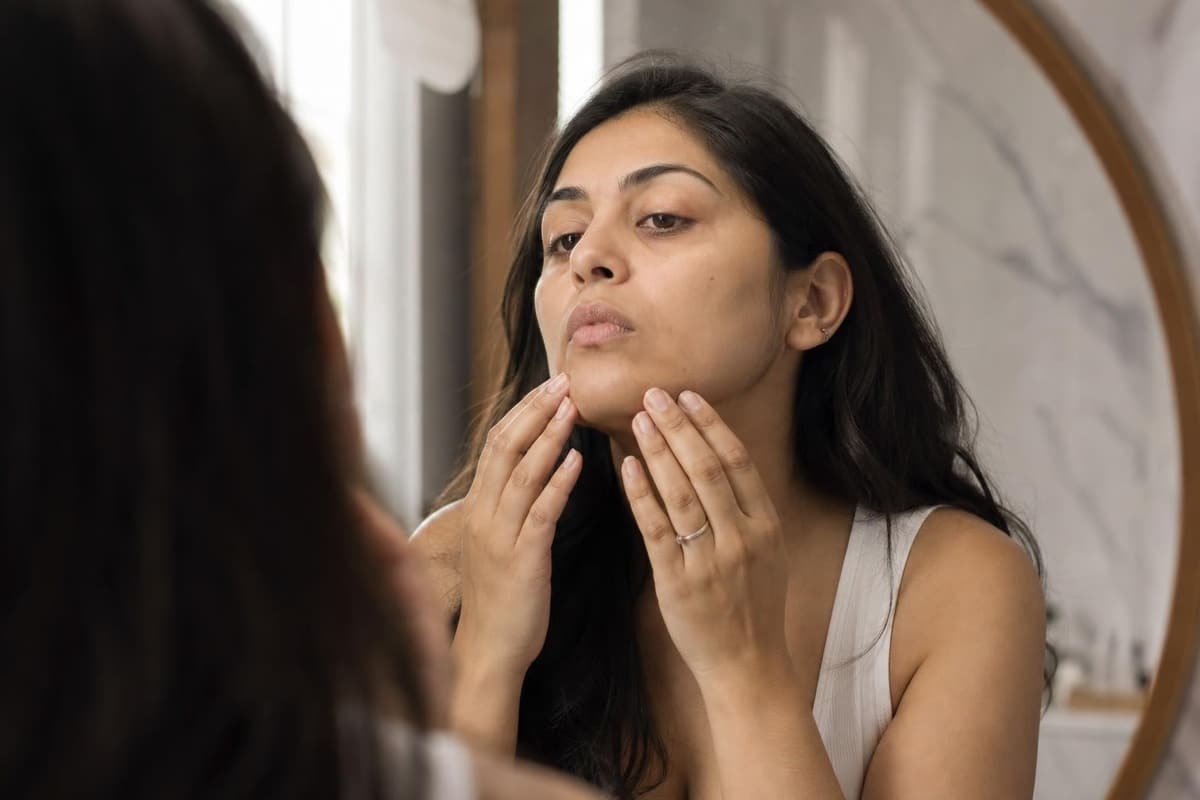
Skin & hair
PCOS face hair (hirsutism) explained: why it happens and what truly helps-medical care plus removal. See options, timeli
By Dr. Parikshit · 20 min read
PCOS basics
Wondering what is a good AMH level to get pregnant? See the 1-4 ng/mL range, why age and ovulation matter most, and how
By Dr. Parikshit · 17 min read

Periods
Polycystic ovaries on a scan are not a diagnosis - and not a barrier to pregnancy.
By Dr. Parikshit · 10 min read

Periods
Adult hormonal acne settles on the lower face - and tracks your cycle.
By Dr. Riya · 6 min read
PCOS basics
Yes. And here is what that actually means for your body.
By Dr. Riya · 5 min read

PCOS basics
A normal weight is not a clearance. It is one of the most missed presentations.
By Dr. Parikshit · 6 min read
PCOS basics
PCOS is not one condition. It is at least four distinct presentations.
By Dr. Parikshit · 6 min read

Weight & metabolism
Your blood sugar can read normal for years while your insulin quietly climbs.
By Dr. Parikshit · 6 min read

PCOS basics
PCOS is rarely one loud symptom. It is usually several quiet ones.
By Dr. Parikshit · 5 min read
These articles are general health education, written by our doctor. They are not a diagnosis. For advice about your own body, book a PCOS Assessment.
A dark, velvety patch on your neck or underarms is one of the few PCOS signs you can see in the mirror that points straight at insulin resistance - and at a higher risk of diabetes.
This article covers:
You have tried besan and haldi. You have tried lemon, a loofah, and maybe a "de-tan" cream. Someone at home has asked if you are washing your neck properly. The dark band stays, and it feels a little thick or velvety when you touch it.
That patch has a name: acanthosis nigricans (a-kan-THO-sis NY-gri-kans), often shortened to AN. It is a change in the structure of the skin itself, and in women with PCOS (or "PCOD", as many Indian clinics call it) it is most often a visible signal that your body is making too much insulin. PCOS/PMOS (polyendocrine metabolic ovarian syndrome, the newly proposed name) is common in India: a meta-analysis of Indian studies found a pooled prevalence of about 11% (Bharali et al., 2022). Many of those women have this patch and have never been told what it means.
Acanthosis nigricans is dark, coarse, thickened skin with a velvety texture. It usually appears on both sides of the body, most often on the neck, underarms, elbow and knee creases, and groin folds (Phiske, 2014). Other skin clues often come with it, such as small skin tags (Hermanns-Lê et al., 2004).
Here is the detail that explains why home remedies disappoint. Under the microscope, the dark colour you see comes mainly from the skin becoming thicker and folded, rather than from extra melanin (the pigment involved in a tan) (Phiske, 2014). So the patch is built from within, by the skin growing, and it does not wash or scrub off.
The main driver is high insulin. When your cells respond poorly to insulin (insulin resistance), your pancreas makes more of it to keep blood sugar normal. That extra insulin does more than manage sugar. At high levels, insulin and a related growth signal called IGF-1 act on skin cells and make them multiply, which produces the thickened, darker skin (Hermanns-Lê et al., 2004; Phiske, 2014).
Why the neck and underarms? Researchers think sweat and friction in skin folds act as extra triggers (Phiske, 2014). In obesity, the severity of AN rises with fasting insulin levels (Phiske, 2014).
This is the same high insulin that pushes the ovaries to make more testosterone, which is why AN often shows up alongside acne, facial hair and irregular periods. For the full picture, read Insulin resistance in women.
Studies of Indian women with PCOS put it at roughly one in three to nearly one in two:
| Study | Where | Women with PCOS | Had acanthosis nigricans |
|---|---|---|---|
| Keen et al., 2017 | Srinagar, Kashmir | 100 | 30% |
| Ramanand et al., 2013 | Western Maharashtra | 120 | 44% |
| de Ávila et al., 2014 | Rio de Janeiro, Brazil | 100 | 53% |
In the Kashmir study, the nape of the neck was the most common site, followed by the underarms and elbow creases (Keen et al., 2017). In the Maharashtra study, AN was linked with higher weight, yet PCOS itself appeared in both heavier and slimmer women (Ramanand et al., 2013). If you are slim and have a dark neck, read Lean PCOS: insulin resistance can be present at any size.
This is the "little alarming" part, and it is worth taking seriously.
In the Brazilian study, women with PCOS who had AN were significantly more likely to have high fasting insulin, a high HOMA-IR score (an insulin resistance estimate) and metabolic syndrome. Metabolic syndrome was present in 36% of the group and was significantly associated only with AN (de Ávila et al., 2014). The authors describe AN as part of the more severe PCOS profile and a sign of cardiovascular risk.
And PCOS itself raises diabetes risk. A large meta-analysis found women with PCOS had about 2.9 times the odds of type 2 diabetes and about 3.3 times the odds of impaired glucose tolerance (prediabetes). For impaired glucose tolerance, the increase was about 5-fold in Asian studies, higher than in Europe or the Americas (Kakoly et al., 2018).
The 2023 International PCOS Guideline states that women with PCOS have a higher risk of prediabetes and type 2 diabetes regardless of age and weight, and recommends checking blood sugar status at diagnosis and every one to three years after that (2023 International PCOS Guideline).
Put simply: a dark neck is your body showing you, on the outside, a problem that is otherwise silent. Seen early, it is very workable.
Insulin running high, usually for a while. Blood sugar can still read normal at this stage.
A higher chance of prediabetes, type 2 diabetes and metabolic syndrome if nothing changes.
An early warning you can act on years before diabetes, when lifestyle change works best.
In women with PCOS, AN is almost always linked to insulin. Rarely, AN is linked to other illnesses, including cancers. A dermatology review lists warning signs that call for a fuller medical check: age over 40, sudden onset of widespread patches, unexplained weight loss, patches in unusual places, thick ridged skin on the palms, or patches that itch or hurt (Phiske, 2014). If any of these fit you, see a doctor promptly rather than treating it as a PCOS skin issue. Certain medicines can also cause AN (Phiske, 2014), so tell your doctor everything you take.
The aim is to measure how your body is handling sugar and insulin.
| Test | What it tells you | Notes |
|---|---|---|
| 75 g oral glucose tolerance test (OGTT) | How your body handles a sugar load over 2 hours | The guideline's preferred test for blood-sugar status in PCOS, at any weight |
| HbA1c | Average blood sugar over about 3 months | Useful if an OGTT is not possible, but less accurate in PCOS |
| Fasting blood glucose | Blood sugar after an overnight fast | Same caveat as HbA1c |
| Fasting insulin (and HOMA-IR) | How much insulin you make when fasting | Widely ordered in India and gives a useful clue, but assays vary |
| Lipid profile, liver enzyme (ALT) | Cholesterol, triglycerides, fatty liver clues | Often checked alongside |
Some honesty about these tests. The 2023 guideline recommends the OGTT as the most accurate test for blood-sugar status in PCOS, and says fasting glucose or HbA1c can be used if an OGTT cannot be done, with significantly reduced accuracy (2023 International PCOS Guideline). The same guideline says that although insulin resistance is central to PCOS, clinically available insulin tests are of limited relevance and not recommended in routine care (2023 International PCOS Guideline). Dermatology reviews still list fasting insulin among the checks for AN linked to weight (Phiske, 2014), and many Indian doctors use it. The practical approach: make sure an OGTT or at least HbA1c is done, and treat fasting insulin as a supporting clue rather than the final answer.
The patch fades when the insulin driving it comes down. That makes treatment mostly about metabolism, with skin treatments as a supporting act.
1. Lower insulin through daily habits. Weight loss and exercise improve insulin sensitivity, reduce insulin levels and improve AN linked to weight (Phiske, 2014). A dermatology review calls weight reduction the most scientific and practical strategy (Das et al., 2020). The PCOS guideline adds that a healthy lifestyle brings benefits even without weight loss, and suggests at least 150-300 minutes of moderate activity a week plus muscle-strengthening on two non-consecutive days (2023 International PCOS Guideline). In Indian meals, that often looks like pairing roti or rice with dal, paneer, eggs or curd and a sabzi, shifting towards whole grains and millets, and taking a 10-15 minute walk after dinner. A nutritionist can build this around your food.
2. Medicine, when your doctor advises it. The guideline says metformin should be considered in adults with PCOS and a BMI of 25 or more for metabolic outcomes including insulin resistance (2023 International PCOS Guideline). A dermatology review notes metformin improves AN and insulin resistance when taken for 6 months or more (Phiske, 2014).
3. Skin treatments from a dermatologist. Options include topical retinoids, vitamin D-based creams and exfoliating agents, chemical peels such as trichloroacetic acid, and certain lasers (Das et al., 2020). These improve appearance, but without lowering insulin the patch tends to persist.
Expect months, and expect gradual lightening rather than overnight change. The strongest evidence for medicine is at 6 months or longer (Phiske, 2014). The review by Das and colleagues is frank that AN is treatable but complete disappearance is difficult to achieve (Das et al., 2020). The real win is underneath: lower insulin means lower diabetes risk, even if a faint shadow remains.
Gentle care works better than force here.
Is a dark neck always a sign of PCOS? No single sign diagnoses PCOS. A dark, velvety neck most often signals insulin resistance, which is common in PCOS but also occurs with higher weight, prediabetes and some medicines. It is a good reason to get checked for both PCOS and blood-sugar problems.
Will acanthosis nigricans go away on its own? It usually persists while insulin stays high. It tends to lighten as insulin comes down through weight change where relevant, exercise, and sometimes metformin, typically over 6 months or more. Complete disappearance is hard to achieve, so aim for improvement.
Can slim women with PCOS get a dark neck? Yes. AN is more common with higher weight, but insulin resistance occurs in slimmer women with PCOS too. In one Maharashtra study, PCOS was seen in both heavier and slimmer women.
Which blood test should I ask for if I have a dark neck? Ask for a 75 g oral glucose tolerance test (OGTT), the most accurate test of blood-sugar status in PCOS per the 2023 International PCOS Guideline. If that is not possible, HbA1c and fasting glucose are alternatives. Fasting insulin can add a clue but is less reliable.
Do fairness or de-tan creams help acanthosis nigricans? They have little to act on. The darkness comes mainly from thickened skin rather than extra pigment, so lowering insulin is what makes it fade. A dermatologist can prescribe retinoids, peels or lasers if you want faster cosmetic improvement.
Is a dark neck dangerous? The patch itself is harmless, but it flags higher insulin and higher diabetes risk. Women with PCOS have about 2.9 times the odds of type 2 diabetes. Rarely, sudden widespread patches, especially after 40 or with weight loss, need prompt medical review.
Explore more in the health library.
This article is for educational purposes only and does not constitute medical advice. Please consult a qualified healthcare professional for diagnosis and management.
Think this might be you?
Start your PCOS Assessment (₹1,490) - a gynaecologist consult plus the blood tests your answers call for, collected from your home. Or ask us a question first.
Ask a doubt, share your point of view, or tell others about your journey.
Sign in to add a comment. Reading the discussion is open to everyone.
Be the first to start the conversation.
Science-backed health resources.
