Periods
Irregular Periods and PCOS: Why They Happen and When to Worry
Why PCOS makes periods late or stop, the exact cycle lengths that count as irregular, when a long gap becomes a risk, and what actually helps.
By Dr. Parikshit · 10 min read
Clear, evidence-based guides on PCOS, periods, skin, weight, mood and more. Written by our doctor, with every fact linked to its source.
Periods
Why PCOS makes periods late or stop, the exact cycle lengths that count as irregular, when a long gap becomes a risk, and what actually helps.
By Dr. Parikshit · 10 min read
Weight & metabolism
Why PCOS makes weight gather around the middle and resist dieting, what a 5-10% loss really does, the diabetes numbers, and a plan that fits Indian food.
By Dr. Parikshit · 10 min read

Mood, sleep & energy
Why anxiety, low mood and mood swings are so common in PCOS, the warning signs that need help today, and what actually helps.
By Dr. Parikshit · 9 min read
Weight & metabolism
Why PCOS disturbs sleep, how common sleep apnoea really is, the signs to watch for, and how better sleep helps insulin resistance.
By Dr. Parikshit · 8 min read
Periods
PCOS is linked to pain and bloating, but the cysts are rarely the cause - here is what to check, and when pain is an emergency.
By Dr. Parikshit · 9 min read
Skin & hair
That dark, velvety neck patch is a visible sign of high insulin - here is what it means, which tests to get, and how it fades.
By Dr. Parikshit · 9 min read
Weight & metabolism
Why PCOS leaves so many women exhausted, the five hidden causes worth testing for, and what actually brings your energy back.
By Dr. Parikshit · 9 min read
PCOS basics
An honest look at PCOS and brain fog: what studies show about memory and focus, what is still unknown, and the testable causes worth fixing first.
By Dr. Parikshit · 9 min read
Skin & hair
Why PCOS thins scalp hair, which other causes to rule out first, the tests to ask for, and which treatments actually regrow hair.
By Dr. Parikshit · 9 min read
Skin & hair
Why PCOS causes coarse facial and body hair, how it is scored for Indian women, which tests to get, and which treatments work over what timeline.
By Dr. Parikshit · 9 min read
Tests
Understand PCOS in Young Women: symptoms, teen diagnosis rules, key tests, and care options for 2026. Get clear steps to
By Dr. Parikshit · 17 min read
Periods
Polycystic ovaries pregnancy explained: fertility, risks, and treatments. Learn how to confirm ovulation, use letrozole,
By Dr. Parikshit · 16 min read
Periods
Androgen hormones support bone, muscle, and fertility; excess can cause hirsutism, acne, and irregular periods. Learn ke
By Dr. Parikshit · 16 min read
Skin & hair
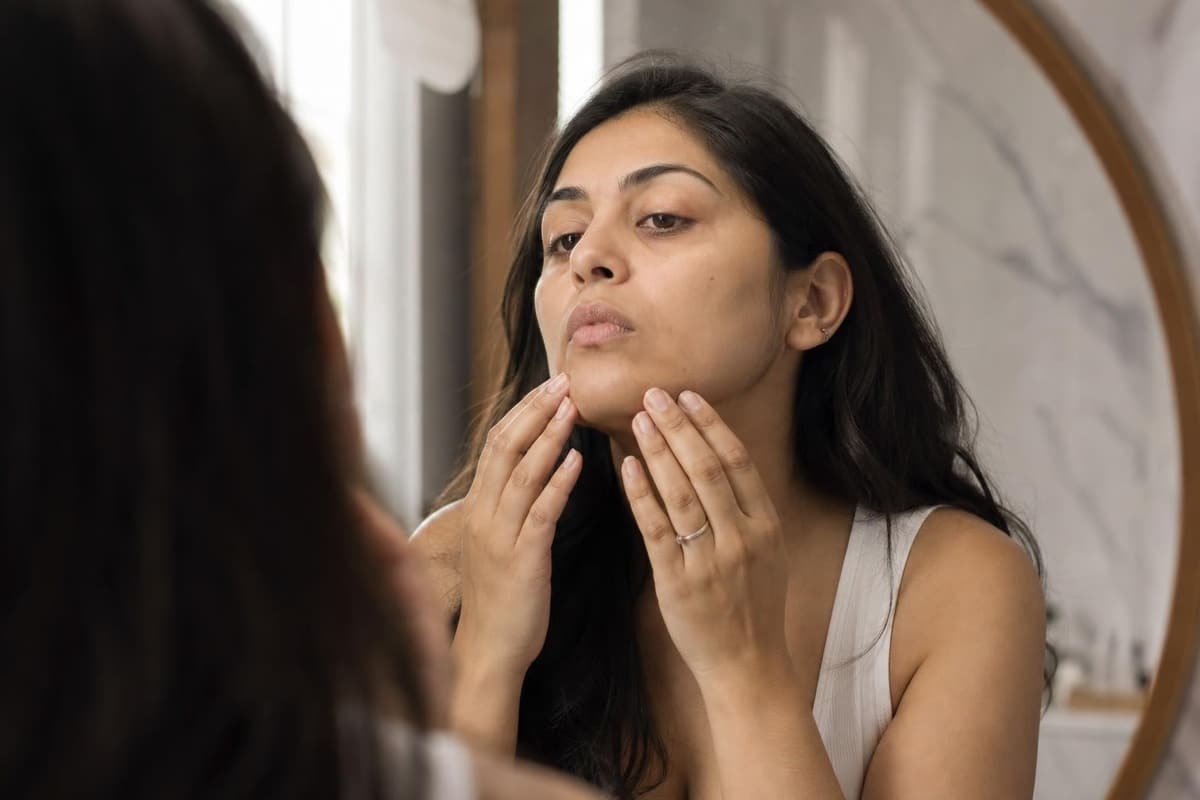
PCOS face hair (hirsutism) explained: why it happens and what truly helps-medical care plus removal. See options, timeli
By Dr. Parikshit · 20 min read
PCOS basics
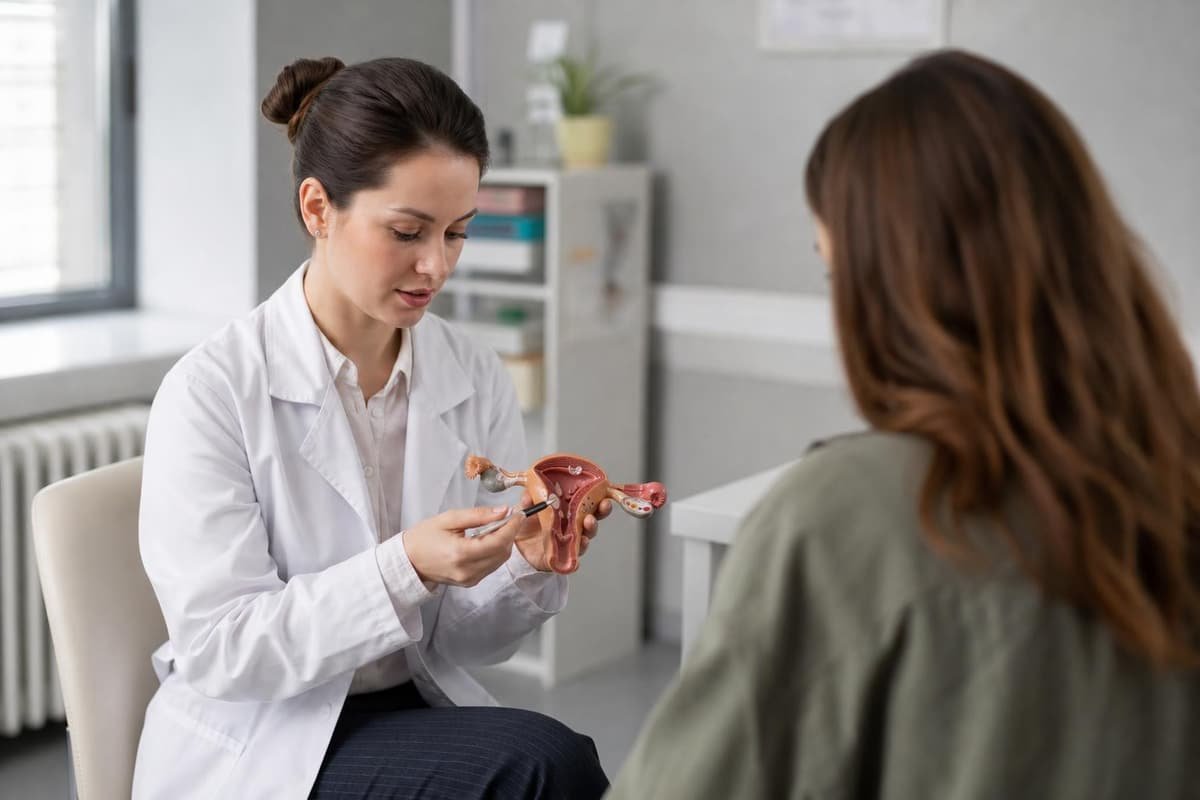
Wondering what is a good AMH level to get pregnant? See the 1-4 ng/mL range, why age and ovulation matter most, and how
By Dr. Parikshit · 17 min read

Periods
Polycystic ovaries on a scan are not a diagnosis - and not a barrier to pregnancy.
By Dr. Parikshit · 10 min read

Periods
Adult hormonal acne settles on the lower face - and tracks your cycle.
By Dr. Riya · 6 min read
PCOS basics
Yes. And here is what that actually means for your body.
By Dr. Riya · 5 min read
PCOS basics
A normal weight is not a clearance. It is one of the most missed presentations.
By Dr. Parikshit · 6 min read
PCOS basics
PCOS is not one condition. It is at least four distinct presentations.
By Dr. Parikshit · 6 min read
Weight & metabolism
Your blood sugar can read normal for years while your insulin quietly climbs.
By Dr. Parikshit · 6 min read
PCOS basics
PCOS is rarely one loud symptom. It is usually several quiet ones.
By Dr. Parikshit · 5 min read
These articles are general health education, written by our doctor. They are not a diagnosis. For advice about your own body, book a PCOS Assessment.
Coarse, dark hair on your chin, upper lip, chest or belly is called hirsutism, and in adults it is one of the strongest single clues to PCOS, which makes it worth testing rather than just threading.
This article covers:
You thread your upper lip every two weeks. You keep tweezers in your bag for the chin hairs that appear overnight. You avoid bright light on video calls.
Many Indian women are told this is "just genetics", "normal for us", or "a little PCOD, don't worry". Sometimes it is genetics. But coarse hair in a male-type pattern is also one of the most telling signs of PCOS/PMOS (polycystic ovary syndrome, recently proposed to be renamed polyendocrine metabolic ovarian syndrome). The 2023 international guideline says that in adults, "the presence of hirsutism alone should be considered predictive" of raised androgens and PCOS (2023 International PCOS Guideline).
That is a strong statement. It means your facial hair deserves a proper workup.
Hirsutism means terminal hair growing where women usually have only fine, light "peach fuzz". Terminal hairs are thick, pigmented, and can grow longer than 5 mm if left alone (2023 International PCOS Guideline). Typical sites are the upper lip, chin, jawline, neck, chest, the line below the belly button, lower back and inner thighs.
The driver is androgens: hormones such as testosterone that every woman makes in small amounts. In PCOS the ovaries often make more, and high insulin pushes them to make more still (see Insulin resistance in women). Hair follicles in these areas respond by switching from fine hair to coarse hair.
In Indian clinic studies of women with PCOS, hirsutism was found in 43.39% in Assam (Yasmin et al., 2025) and 53.32% in Andhra Pradesh (Mavulati & Dodoala, 2025). Looking the other way, in a Kashmir study of women with hirsutism, PCOS was the cause in 37.3% (Zargar et al., 2002).
Doctors grade hirsutism with the modified Ferriman–Gallwey (mFG) score. They look at 9 body areas: upper lip, chin, chest, upper back, lower back, upper abdomen, lower abdomen, upper arms and thighs. Each area gets 0 (no terminal hair) to 4 (dense, male-type growth), so the total runs from 0 to 36 (Josyula et al., 2024).
The guideline says a score of 4 to 6 should be used to detect hirsutism, "depending on ethnicity" (2023 International PCOS Guideline). It also recommends using a photographic atlas, and it notes something important: because most women remove hair before appointments, self-treatment "can limit clinical assessment". Your own description of unwanted hair has "a high degree of validity" and merits close evaluation, even if the doctor sees smooth skin (2023 International PCOS Guideline).
Practical tip: take clear photos of each area before your next threading or waxing session, and note how often you remove hair.
The guideline notes that hirsutism severity varies by ethnicity, while its prevalence appears similar across ethnic groups (2023 International PCOS Guideline). For Indian women specifically, a 2024 community study of 453 young South Indian women found a median mFG score of just 1. The authors proposed a cut-off of 5 for South Indian women. At the older cut-off of 8, only 1.8% counted as hirsute. At 5, the figure was 9.9% (Josyula et al., 2024).
In plain words: using a Western cut-off can miss hirsutism in Indian women. If you were told your score was "only 5 or 6, that's fine", it is worth a second look.
Most PCOS hair builds slowly, over several months to years. PCOS and closely related androgen excess account for more than 85% of hirsutism cases (AAFP review, 2019). Rarely, excess hair comes from something more serious. In the Kashmir study, 2.1% of hirsute women had an adrenal tumour and 1.4% had congenital adrenal hyperplasia, an inherited adrenal enzyme condition (Zargar et al., 2002).
The guideline says new-onset, severe or worsening hyperandrogenism, including hirsutism, "requires further investigation to rule out androgen-secreting tumours" (2023 International PCOS Guideline).
Warning signs listed by the American Academy of Family Physicians and the guideline (AAFP review, 2019; 2023 International PCOS Guideline):
Hair that appears or spreads fast, within a few months, or keeps worsening despite treatment.
A deepening voice, more muscle bulk, male-pattern balding, shrinking breasts or clitoral enlargement.
New, severe or worsening coarse hair after your periods have stopped.
Weight gain around the middle with a rounded face, purple stretch marks and high blood pressure.
Androgen-secreting tumours are rare, but more than half are malignant (AAFP review, 2019). If any of these apply, see a doctor within days to weeks rather than months.
The Endocrine Society suggests testing androgen levels in all women with an abnormal hirsutism score (Endocrine Society guideline, 2018). The PCOS guideline sets out which tests (2023 International PCOS Guideline):
| Test | Why it is done |
|---|---|
| Total testosterone | The main androgen. Accurate methods (LC-MS/MS) are preferred |
| Free testosterone or free androgen index (FAI) | The active fraction; can be raised when total is normal |
| DHEAS | An adrenal androgen, checked if testosterone is normal |
| 17-OH progesterone | Screens for congenital adrenal hyperplasia |
| TSH and prolactin | Excludes thyroid and pituitary causes |
| Fasting insulin, HbA1c, lipids | The metabolic side of PCOS |
A normal testosterone does not always close the case. Some women have hirsutism with normal hormone levels, called idiopathic hirsutism (Zargar et al., 2002). Test method matters too: the guideline says direct immunoassays have "limited accuracy" compared with LC-MS/MS (2023 International PCOS Guideline), so it is worth asking which method your lab uses.
Excess hair is often the visible edge of a metabolic condition.
The guideline asks doctors to treat your report of unwanted hair as important, "regardless of apparent clinical severity" (2023 International PCOS Guideline). If you plan your day around razors, lighting and photos, that burden is real. Talking to a therapist is a valid part of treatment; the guideline recommends evidence-based therapy such as cognitive behaviour therapy (CBT) for body-image distress (2023 International PCOS Guideline).
Think of it as two tracks running together. One track removes the hair you already have. The other lowers the hormonal signal that makes new coarse hair.
In a 30-day randomised trial, spearmint tea lowered free and total testosterone, and women felt their hair had improved. But the doctor-rated hirsutism score did not change significantly (Grant, 2010). A pleasant habit, then, with no proven effect on visible hair yet.
| Timeframe | What is realistic |
|---|---|
| Same day | Shaving, threading, waxing |
| Up to 6 months | Eflornithine shows its effect |
| 6 months | Fair point to judge the pill; add an anti-androgen only if response is poor |
| Months to years | Laser gains build session by session; PCOS often needs extra sessions |
Because hair grows in long cycles, each medicine should be tried for at least six months before switching (AAFP review, 2019). Medicine mainly slows new growth, so the Endocrine Society suggests adding direct removal such as laser or electrolysis for extra cosmetic benefit (Endocrine Society guideline, 2018).
Is facial hair always a sign of PCOS? No. In a Kashmir study of hirsute women, 38.7% had idiopathic hirsutism (no hormonal cause found) and 37.3% had PCOS (Zargar et al., 2002). Testing tells the two apart.
What mFG score counts as hirsutism for Indian women? The guideline uses 4 to 6 depending on ethnicity (2023 International PCOS Guideline). A South Indian study proposed 5 (Josyula et al., 2024).
Does threading or shaving make hair grow back thicker? Shaving does not change thickness, colour or growth rate (Mayo Clinic).
Is laser hair removal worth it with PCOS? The guideline supports it for facial hirsutism, with the caveat that more sessions may be needed and that the laser must suit your skin and hair colour (2023 International PCOS Guideline).
Can I take spironolactone on my own? Only under a doctor, and only with effective contraception, because of the risk to a male baby if you conceive (2023 International PCOS Guideline).
When is excess hair an emergency? When it appears or worsens fast, comes with a deeper voice or clitoral enlargement, or starts after menopause. These need tests to rule out a tumour (2023 International PCOS Guideline).
This article is for educational purposes only and does not constitute medical advice. Please consult a qualified healthcare professional for diagnosis and management.
Think this might be you?
Start your PCOS Assessment (₹1,490) - a gynaecologist consult plus the blood tests your answers call for, collected from your home. Or ask us a question first.
Ask a doubt, share your point of view, or tell others about your journey.
Sign in to add a comment. Reading the discussion is open to everyone.
Be the first to start the conversation.
Science-backed health resources.
