
Periods
Irregular Periods and PCOS: Why They Happen and When to Worry
Why PCOS makes periods late or stop, the exact cycle lengths that count as irregular, when a long gap becomes a risk, and what actually helps.
By Dr. Parikshit · 10 min read
Clear, evidence-based guides on PCOS, periods, skin, weight, mood and more. Written by our doctor, with every fact linked to its source.
Periods
Why PCOS makes periods late or stop, the exact cycle lengths that count as irregular, when a long gap becomes a risk, and what actually helps.
By Dr. Parikshit · 10 min read

Weight & metabolism
Why PCOS makes weight gather around the middle and resist dieting, what a 5-10% loss really does, the diabetes numbers, and a plan that fits Indian food.
By Dr. Parikshit · 10 min read

Mood, sleep & energy
Why anxiety, low mood and mood swings are so common in PCOS, the warning signs that need help today, and what actually helps.
By Dr. Parikshit · 9 min read

Weight & metabolism
Why PCOS disturbs sleep, how common sleep apnoea really is, the signs to watch for, and how better sleep helps insulin resistance.
By Dr. Parikshit · 8 min read
Periods
PCOS is linked to pain and bloating, but the cysts are rarely the cause - here is what to check, and when pain is an emergency.
By Dr. Parikshit · 9 min read
Skin & hair
That dark, velvety neck patch is a visible sign of high insulin - here is what it means, which tests to get, and how it fades.
By Dr. Parikshit · 9 min read

Weight & metabolism
Why PCOS leaves so many women exhausted, the five hidden causes worth testing for, and what actually brings your energy back.
By Dr. Parikshit · 9 min read

PCOS basics
An honest look at PCOS and brain fog: what studies show about memory and focus, what is still unknown, and the testable causes worth fixing first.
By Dr. Parikshit · 9 min read

Skin & hair
Why PCOS thins scalp hair, which other causes to rule out first, the tests to ask for, and which treatments actually regrow hair.
By Dr. Parikshit · 9 min read

Skin & hair
Why PCOS causes coarse facial and body hair, how it is scored for Indian women, which tests to get, and which treatments work over what timeline.
By Dr. Parikshit · 9 min read

Tests
Understand PCOS in Young Women: symptoms, teen diagnosis rules, key tests, and care options for 2026. Get clear steps to
By Dr. Parikshit · 17 min read
Periods
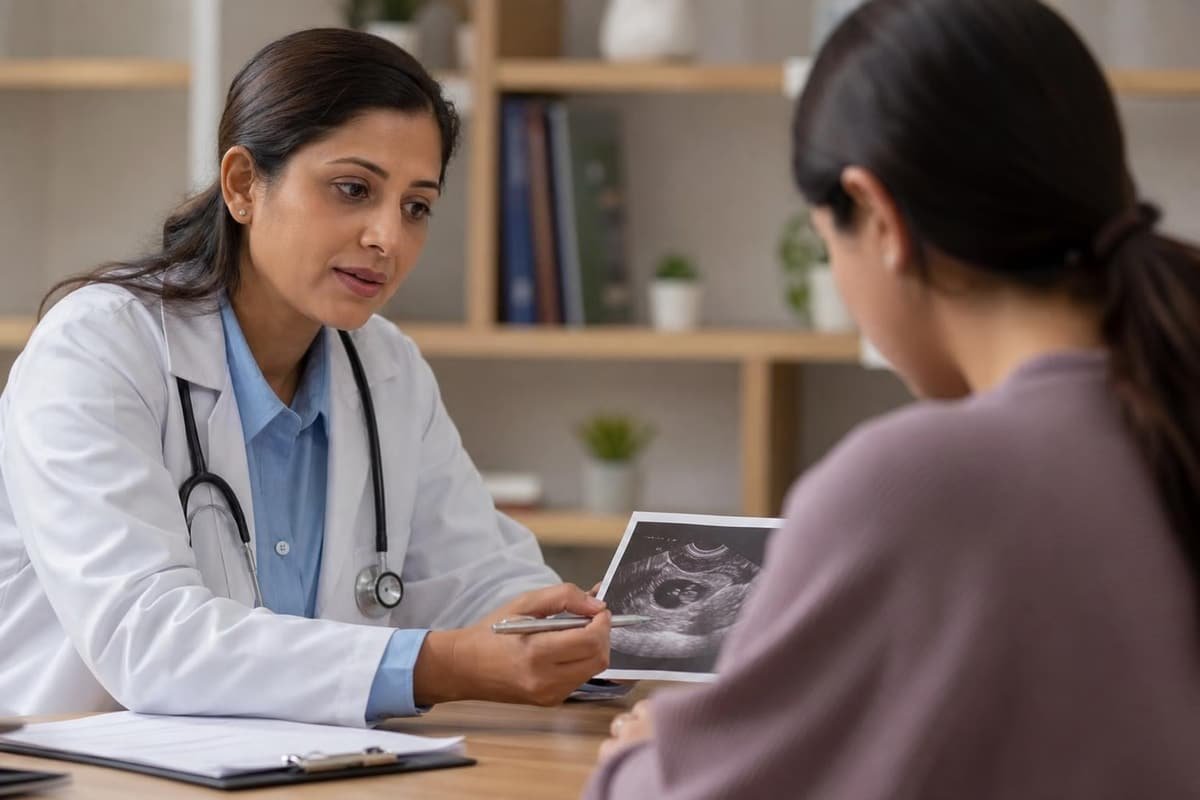
Polycystic ovaries pregnancy explained: fertility, risks, and treatments. Learn how to confirm ovulation, use letrozole,
By Dr. Parikshit · 16 min read
Periods
Androgen hormones support bone, muscle, and fertility; excess can cause hirsutism, acne, and irregular periods. Learn ke
By Dr. Parikshit · 16 min read
Skin & hair
PCOS face hair (hirsutism) explained: why it happens and what truly helps-medical care plus removal. See options, timeli
By Dr. Parikshit · 20 min read
PCOS basics
Wondering what is a good AMH level to get pregnant? See the 1-4 ng/mL range, why age and ovulation matter most, and how
By Dr. Parikshit · 17 min read

Periods
Polycystic ovaries on a scan are not a diagnosis - and not a barrier to pregnancy.
By Dr. Parikshit · 10 min read

Periods
Adult hormonal acne settles on the lower face - and tracks your cycle.
By Dr. Riya · 6 min read
PCOS basics
Yes. And here is what that actually means for your body.
By Dr. Riya · 5 min read

PCOS basics
A normal weight is not a clearance. It is one of the most missed presentations.
By Dr. Parikshit · 6 min read
PCOS basics
PCOS is not one condition. It is at least four distinct presentations.
By Dr. Parikshit · 6 min read

Weight & metabolism
Your blood sugar can read normal for years while your insulin quietly climbs.
By Dr. Parikshit · 6 min read

PCOS basics
PCOS is rarely one loud symptom. It is usually several quiet ones.
By Dr. Parikshit · 5 min read
These articles are general health education, written by our doctor. They are not a diagnosis. For advice about your own body, book a PCOS Assessment.
Polycystic ovaries on an ultrasound report are a scan finding - not an automatic diagnosis of PCOS/PMOS, and not a sign that pregnancy is impossible. When polycystic ovaries are part of PCOS, conception may take longer because ovulation can be irregular or absent. With proper evaluation and treatment - starting, in many cases, with ovulation-induction medicines like letrozole - most women with PCOS do conceive. Pregnancy with PCOS is possible, but it benefits from closer monitoring for gestational diabetes and blood-pressure complications.
This article is for education and does not replace medical advice. If you are trying to conceive, pregnant, have irregular periods, or have a history of miscarriage, speak with a qualified gynaecologist or fertility specialist.
If you just saw "polycystic ovaries" on a scan report and want to know what it means for pregnancy, here is the short answer: polycystic ovaries describes an ultrasound appearance where the ovaries show many small follicles. These are not dangerous cysts. They are small fluid-filled structures that may not be maturing or releasing an egg regularly.
Having polycystic-looking ovaries on a scan can be one feature of PCOS, but on its own it does not prove you have the condition. PCOS affects roughly 1 in 10 women of childbearing age and is one of the most common, treatable causes of infertility. In India, a meta-analysis of prevalence studies estimated PCOS affects around 11% of reproductive-age women, though numbers vary depending on which diagnostic criteria are used.
The central point: polycystic ovaries and pregnancy are not mutually exclusive. The main fertility issue in PCOS is usually ovulation - not that the ovaries cannot support a pregnancy.
If you have a scan report showing polycystic ovaries, irregular periods, or PCOS and want a structured starting point, Tvarvi's First Visit combines at-home lab testing with a gynaecologist-led review.
Your ovaries contain follicles - small structures that hold developing eggs. On an ultrasound, "polycystic" means the scan shows many of these small follicles (typically 20 or more per ovary, or increased ovarian volume). The name is misleading, because these are not harmful cysts in the way most people understand the word. They are immature follicles affected by hormonal imbalance.
Polycystic ovaries are a scan finding, not a complete diagnosis. Polycystic ovaries can describe an ultrasound appearance without any symptoms or hormone abnormalities (NHS). Many women have this appearance on scans without ever experiencing fertility issues or PCOS symptoms.
So if your report says "polycystic ovaries," it means your ovaries look a certain way on imaging. What matters next is whether you also have ovulation problems, androgen-related symptoms (acne, excess hair growth, hair thinning), or metabolic features that together point to PCOS.
This terminology trips people up constantly. Here is the breakdown.
Polycystic ovaries (PCO or PCOM) is the ultrasound appearance - many small follicles, increased ovarian volume, or both. It is one possible feature of PCOS, but it can also be an incidental finding with no clinical significance.
PCOS (polycystic ovary syndrome) is a hormonal and metabolic condition. The 2023 international evidence-based guideline supports diagnosis when at least two of three features are present after excluding other causes: ovulatory dysfunction (irregular or absent periods), clinical or biochemical hyperandrogenism, and polycystic ovarian morphology on ultrasound. The updated guideline also allows AMH as an alternative to ultrasound in adults.
PCOD (polycystic ovarian disease) is a term widely used in India. Most of the time, people saying PCOD mean PCOS. The medically preferred term is PCOS, and that is what this article uses.
Not sure whether your symptoms fit PCOS? Tvarvi's free PCOS score takes two minutes and can help you decide whether a clinical evaluation is worth pursuing.
Yes. This is the most important sentence in the article.
If polycystic ovaries are an isolated scan finding and your cycles and hormones are normal, the impact on fertility may be limited or nonexistent. If polycystic ovaries are part of PCOS and ovulation is irregular or absent, conception can take longer - but effective treatments exist. Most women with PCOS become pregnant, though they may take longer and may be more likely to need fertility treatment than women without the condition.
The path is often not a single "natural cure" but a combination of medical evaluation, sometimes progesterone to restart cycles, metabolic management, and ovulation-induction medication. The recurring theme in PCOS conception stories is not hopelessness - it is that the right medical steps make a measurable difference.
The real question is not "can I get pregnant with polycystic ovaries?" but rather "am I ovulating?"
Ovulation is the release of a mature egg from the ovary. In PCOS, several things can interfere with this process. Follicles may start to develop but not mature fully. Elevated androgens can block the final stages of egg release. Insulin resistance, common in PCOS, can worsen androgen levels and further disrupt the cycle. The result is that eggs may not be released predictably, or at all - which shows up as irregular periods, very long cycles (often over 35 days), or months with no period.
One critical point most articles gloss over: having a period does not always mean you ovulated. A monthly bleed can be reassuring, but in PCOS, cycles may be anovulatory - bleeding without a mature egg being released. Some women also get withdrawal bleeds from hormonal medicines, which are not proof of natural ovulation.
If your cycles are very irregular or absent, do not rely only on period-tracking apps. They assume ovulation timing from average cycles, and that assumption falls apart when PCOS is involved.
Planning pregnancy with polycystic ovaries or PCOS should not be reduced to "take a tablet and try." A proper preconception evaluation involves several steps:
If your care plan only says "lose weight and come back," it is incomplete. PCOS pregnancy preparation should include diagnosis confirmation, ovulation assessment, metabolic screening and emotional support - the kind of structured, coordinated evaluation Tvarvi's care model is built around.
Period-tracking apps estimate your fertile window from past cycle lengths. If your cycles vary from 28 days to 60 days to none at all, the app is guessing.
LH (luteinising hormone) ovulation predictor kits detect the LH surge that typically occurs about 1 to 1.5 days before ovulation. But in PCOS these strips can be confusing: women with PCOS may have tonically elevated LH, so strips can show positive results even without confirmed ovulation. Always-positive strips, multi-day surges, or confusing patterns are common - a positive LH strip suggests the body is attempting to ovulate, but it does not prove an egg was released.
More reliable methods for confirming ovulation include serum progesterone testing timed after suspected ovulation (a reliable objective measure) and follicular ultrasound monitoring, where a doctor tracks follicle growth. If you are trying to conceive and your periods are unpredictable, ask your doctor how to confirm ovulation rather than relying only on strips or calendar apps.
Treatment typically follows a stepwise approach. IVF is not the first step for most women whose primary issue is anovulation.
This is not about crash diets or vague "just lose weight" instructions. It is about creating metabolic conditions that support ovulation and a healthy pregnancy. The 2023 guideline recommends optimising blood pressure, smoking status, alcohol intake, diet, folate supplementation, exercise, sleep and mental health before pregnancy. Movement, balanced nutrition and sleep matter - but they should be part of a plan, not the entire plan. For PCOS-specific nutrition that accounts for insulin resistance and Indian dietary patterns, a clinical dietitian is far more effective than generic advice online.
The 2023 international guideline recommends letrozole as first-line pharmacological treatment for ovulation induction in women with anovulatory PCOS when no other infertility factors are present. Cochrane evidence found letrozole produced higher live-birth rates than clomiphene citrate, with little or no difference in miscarriage rate. It should be prescribed by a clinician and must not be taken if pregnancy may already exist.
Prescribing the tablet alone is not the whole cycle. Ovulation induction works best when the response is confirmed with follicular scans, timing is optimised, and the plan is reviewed if several cycles fail. The practical questions after failed cycles: Was ovulation confirmed? Was timing correct? Are the tubes open? Is semen normal? Is the dose right? Should IUI or IVF be considered?
Metformin can improve clinical pregnancy and live-birth rates in anovulatory PCOS, but the 2023 guideline is clear that more effective ovulation agents exist. Metformin is useful for metabolic features like insulin resistance and glucose management, and may be part of a fertility plan - but it should not be positioned as the primary fertility treatment when letrozole is available. Whether to continue metformin during pregnancy depends on insulin resistance, glucose results, BMI, prior pregnancy history and your doctor's assessment. It is not a universal fertility or miscarriage-prevention medicine.
Clomiphene citrate remains an option where letrozole is unavailable or in specific scenarios. Gonadotropin injections require monitoring because of risks like multiple pregnancy and ovarian hyperstimulation. IVF may be considered when ovulation induction and IUI have not succeeded, or when another infertility factor (tubal disease, severe male factor, endometriosis) is present. If your main issue is anovulation and other factors are normal, ovulation induction is usually tried first - IVF is for when simpler approaches have not worked, not the default starting point.
Clear thresholds exist, and they differ by situation:
If you have irregular periods, polycystic ovaries on a scan, or PCOS and want medical guidance, a gynaecologist consultation can help clarify whether you are ovulating and what steps fit your situation.
Many women with PCOS have healthy pregnancies. But PCOS is considered a higher-risk condition, and the 2023 guideline recommends that PCOS status be identified during antenatal care with appropriate monitoring. A large 2024 systematic review analysing 104 studies and over 106,000 pregnancies found PCOS was associated with higher odds of adverse outcomes, probably independent of age and BMI.
The specific risks, from guideline summaries:
These are averages across studies. They do not mean something will go wrong - they mean your care team should be watching for these complications so they are caught early. PCOS pregnancy does not automatically mean a complicated pregnancy. It means a monitored one.
If you are pregnant with polycystic ovaries or PCOS, discuss these with your obstetrician:
Myth: Polycystic ovaries always mean PCOS. Reality: they can be an isolated scan finding. PCOS diagnosis requires the full clinical picture, including cycle history and androgen assessment.
Myth: PCOS means you cannot get pregnant. Reality: many women with PCOS get pregnant naturally or with treatment. It is one of the most common and treatable causes of infertility.
Myth: A monthly period proves ovulation. Reality: in PCOS, bleeding can occur without ovulation. If trying to conceive, ovulation may need confirmation through blood tests or ultrasound.
Myth: LH ovulation strips always work in PCOS. Reality: high baseline LH or multiple surges can produce confusing or false-positive results.
Myth: IVF is always the first step. Reality: when the main issue is anovulation and other factors are normal, ovulation induction is tried before IVF.
Myth: Metformin prevents miscarriage and gestational diabetes in PCOS. Reality: current guideline evidence does not support routine use of metformin for preventing these complications.
Myth: Inositol is a proven fertility treatment for PCOS. Reality: the 2023 guideline considers inositol experimental therapy for infertility in PCOS; benefits and risks are too uncertain to recommend it as proven.
If you have irregular periods, a scan showing polycystic ovaries, or PCOS and are planning pregnancy, a structured evaluation can clarify what is happening and what to do next. Tvarvi's care plans combine gynaecology, nutrition, counselling and at-home diagnostics into a single personalised plan, so your path forward is based on your labs and symptoms. For more on insulin resistance, cycle tracking and preconception nutrition, visit the Tvarvi health library.
No. Polycystic ovaries describes how ovaries look on ultrasound - many small follicles. PCOS is a broader condition diagnosed when at least two of three features are present (ovulatory dysfunction, hyperandrogenism, polycystic ovarian morphology) after other causes are excluded. You can have polycystic-appearing ovaries without having PCOS.
Yes - many women with PCOS conceive naturally, especially if ovulation is happening regularly. If ovulation is irregular or absent, ovulation induction can significantly improve chances. Natural pregnancy is more likely when ovulation is confirmed, not just assumed.
Regular cycles suggest ovulation but do not guarantee it. LH strips can be unreliable in PCOS because of elevated baseline LH. Doctors may use serum progesterone testing timed after suspected ovulation, or follicular ultrasound monitoring, for more reliable confirmation.
The 2023 international guideline recommends letrozole as first-line ovulation induction for anovulatory PCOS when no other infertility factors are present. It must be prescribed and monitored by a clinician.
Metformin may help some women, especially where insulin resistance is significant, but it is not a universal pregnancy medicine. In pregnancy, current evidence says it has not been shown to prevent gestational diabetes, late miscarriage or pre-eclampsia in women with PCOS. Its use should be guided by your doctor based on your specific risk profile.
Yes. The 2023 guideline recommends an OGTT when planning pregnancy or seeking fertility treatment. If not done before pregnancy, it should be offered at the first antenatal visit and repeated at 24-28 weeks.
Evidence suggests the risk is about 1.5× higher than in women without PCOS. This does not mean miscarriage is likely, but it is one reason pregnancy with PCOS benefits from careful monitoring and early antenatal care.
If your periods are very irregular or absent, see a doctor before trying on your own for months. With regular cycles: 12 months of trying if under 35, and 6 months if 35 or older. If you are over 40, have recurrent miscarriage, or suspect other factors, seek evaluation sooner.
Think this might be you?
Start your PCOS Assessment (₹1,490) - a gynaecologist consult plus the blood tests your answers call for, collected from your home. Or ask us a question first.
Ask a doubt, share your point of view, or tell others about your journey.
Sign in to add a comment. Reading the discussion is open to everyone.
Be the first to start the conversation.
Science-backed health resources.
